
Introduction
Amish apple butter canning recipe is one of the most beloved traditional preserves in American homesteads, especially among Amish families. Unlike applesauce, apple butter is cooked slowly for several hours until it becomes rich, thick, and deeply caramelized. The slow cooking process concentrates the natural sugars of apples, giving apple butter its distinctive flavor and smooth texture.
The Amish Apple Butter Canning Recipe is a traditional method that not only produces delicious apple butter but also allows for long-term storage using safe water bath canning methods. This method ensures that your homemade apple butter stays safe for pantry storage while maintaining its full flavor.
In this article, we will cover everything you need to know to make perfect Amish apple butter, including ingredient selection, step-by-step cooking instructions, proper canning techniques, storage tips, and answers to frequently asked questions. This comprehensive guide will give you all the information you need to confidently create apple butter at home that is safe, tasty, and shelf-stable.
Table of Contents
History of Amish Apple Butter Canning Recipe
Amish apple butter canning recipe has deep roots in the Amish community and other rural American homesteads. In times before refrigeration, families had to find ways to preserve fruits through the winter. Apple butter emerged as a solution to the seasonal abundance of apples in the fall.
Traditionally, apple butter was prepared by simmering apples for hours over an open hearth or wood stove. The apples were mashed continuously, sometimes overnight, until they reduced into a thick, spreadable consistency. Spices like cinnamon, cloves, and nutmeg were added not only for flavor but also for their natural preservative qualities.
This long-standing tradition continues today, both for its taste and for its connection to the heritage of self-sufficient living. Modern home cooks can follow these same principles safely using water bath canning methods, ensuring that the apple butter is both delicious and properly preserved.
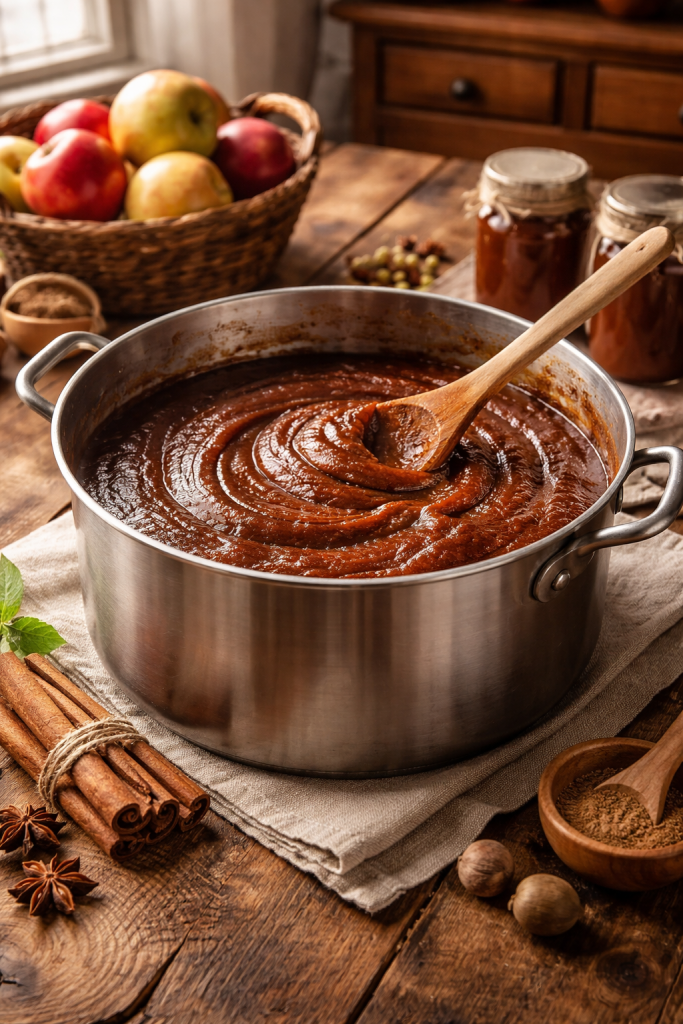
Ingredients
To make traditional Amish apple butter canning recipe, you only need a few simple, wholesome ingredients. Using quality ingredients ensures the best flavor.
- 6 pounds apples (peeled, cored, and chopped) – a mix of sweet and slightly tart apples such as Fuji, Gala, Honeycrisp, or Golden Delicious is ideal
- 2 cups brown sugar
- 1 cup granulated sugar
- 2 teaspoons ground cinnamon
- ½ teaspoon ground nutmeg
- ¼ teaspoon ground cloves
- ¼ teaspoon salt
- 1 tablespoon lemon juice
- 1 teaspoon vanilla extract (optional, adds depth of flavor)
Pro Tips for Ingredients:
- Mix apple varieties: Combining different types of apples enhances flavor complexity.
- Sugar balance: Adjust the sugar slightly depending on the sweetness of your apples. Tart apples may require a touch more sugar.
- Spices: Cinnamon, nutmeg, and cloves are traditional and can be adjusted based on preference. Cloves are strong; a small amount adds warmth without overpowering the butter.
Equipment Needed
Before you begin, gather all the necessary equipment. Having the right tools makes the process safer and smoother.
- Large stock pot or slow cooker
- Immersion blender or food processor
- Mason jars with lids and bands
- Water bath canner
- Jar lifter
- Canning funnel
- Clean towels
Properly sterilized jars are critical to prevent contamination and ensure a safe seal.
Step-by-Step Amish Apple Butter Canning Recipe
Step 1: Prepare the Apples
- Wash, peel, core, and chop the apples into small pieces.
- Place the chopped apples into a large stock pot with ½ cup water to prevent sticking.
- Cook over medium heat until the apples are soft, approximately 15–20 minutes.
Pro Tip: Use a heavy-bottomed pot to prevent the apples from scorching. Stir occasionally during cooking.
Step 2: Puree the Apples
Once the apples are soft:
- Use an immersion blender or food processor to puree them until smooth.
- The resulting texture should resemble thick applesauce.
Tip: If you prefer slightly chunky apple butter, you can puree only part of the mixture.
Step 3: Add Sugar, Spices, and Lemon Juice
Add the brown sugar, granulated sugar, cinnamon, nutmeg, cloves, salt, and lemon juice to the apple puree.
Stir thoroughly to combine all ingredients. The mixture should be uniform in color and texture.
Why Lemon Juice?
Lemon juice increases the acidity slightly, which improves shelf stability and balances the sweetness of the apples.
Step 4: Slow Cook the Apple Butter
- Reduce heat to low and cook the mixture slowly for 2–3 hours, stirring occasionally.
- The apple butter will gradually darken and thicken as the water evaporates.
- To test readiness: Spoon some onto a plate; if it holds its shape without running, the butter is ready.
Pro Tips:
- Cooking slowly is key; high heat may scorch the apple butter.
- Stir every 15–20 minutes to prevent sticking.
- Use a wide, heavy pot to speed up evaporation evenly.
Step 5: Prepare Jars for Canning
- Sterilize mason jars by boiling them for 10 minutes.
- Keep jars warm until ready to fill.
- This ensures proper sealing during the canning process.
You can read our complete guide here How to Sterilize Canning Jars Properly (Complete Safety Guide)
Step 6: Fill the Jars
- Use a canning funnel to pour the hot apple butter into jars, leaving ¼ inch of headspace.
- Wipe rims clean, place lids, and screw on the bands finger-tight.
Step 7: Water Bath Canning
- Place jars in a boiling water bath canner.
- Processing times:
- Half-pint jars → 10 minutes
- Pint jars → 15 minutes
- Adjust processing time based on altitude.
- Remove jars with a jar lifter and allow to cool.
- Ensure lids “pop,” indicating a proper seal.
Safety Tip: If a lid does not seal, refrigerate the jar and use within a few weeks.
You can read our complete guide here Water Bath Canning for Beginners: 9 Easy Steps for Safe & Successful Canning
Storage Instructions
- Store in a cool, dark pantry.
- Properly sealed jars can last up to 1 year.
- Label jars with the date for reference.
- Refrigerate any jars that fail to seal.
Uses of Amish Apple Butter Canning Recipe
- Spread on toast, biscuits, or bagels
- Topping for pancakes or waffles
- Filling for pastries or cakes
- Stir into oatmeal, yogurt, or porridge
- Glaze for roasted meats
Apple butter canning recipe is highly versatile and adds natural sweetness and spice to many dishes.
Expert Tips for Perfect Apple Butter Canning Recipe
- Mix apple varieties for richer flavor.
- Cook slowly to avoid burning and to caramelize sugars.
- Stir occasionally to prevent sticking and ensure even cooking.
- Check thickness with the spoon test: it should hold its shape on a spoon.
- Adjust sugar and spices based on taste.
Common Mistakes to Avoid
- Using under-ripe or overly watery apples
- Cooking at high heat
- Skipping lemon juice
- Overfilling jars or not leaving proper headspace
- Not sterilizing jars properly
- Ignoring air bubbles before sealing
Correcting these mistakes ensures safe, delicious apple butter.
Safe canning begins with safe preparation to avoided mistake from 10 Common Canning Mistakes
Nutrition Information (Approximate per Tablespoon)
- Calories: 35
- Carbohydrates: 9g
- Sugar: 8g
- Fat: 0g
- Fiber: 0.3g
Apple butter is naturally sweet, so enjoy in moderation.
Frequently Asked Questions (FAQ)
Q1: What is the difference between applesauce and apple butter?
A: Amish apple butter canning recipe is cooked longer until thick and dark, while applesauce is thinner and less concentrated.
Q2: Can I make apple butter in a slow cooker?
A: Yes, a slow cooker works well and helps prevent sticking, though a heavy pot on low heat works too.
Q3: How long does canned apple butter last?
A: Properly sealed jars can last up to 1 year in a cool, dark pantry.
Q4: Can apple butter be frozen?
A: Yes. Store in airtight containers for up to 12 months.
Q5: What apples are best?
A: Sweet varieties like Fuji, Gala, Honeycrisp, or Golden Delicious work best. Mix for depth of flavor.
Recipe Summary
Prep Time: 20 minutes
Cook Time: 3 hours
Total Time: 3 hours 20 minutes
Yield: 6 half-pint jars
Food safety should always come first in home preservation according to the National Center for Home Food Preservation…