
Canning mistakes that can make you sick are more common than most people think. Many beginners assume home canning is simple, but even small errors can affect food safety if proper guidelines are not followed.
According to USDA-tested food safety guidelines followed by the National Center for Home Food Preservation, safe canning depends on precise control of temperature, pressure, and processing time. These are not optional steps—each one plays a critical role in preventing harmful bacteria from surviving inside sealed jars.
From my own experience, I learned that rushing the process often leads to mistakes. Taking your time makes all the difference.
Table of Contents
Quick Answer
The most dangerous canning mistakes include using the wrong method, not processing jars long enough, skipping sterilization, and ignoring spoilage signs. These errors can allow harmful bacteria to grow inside sealed jars.
In simple terms, safe canning depends on tested methods, accurate timing, and proper equipment. If any of these are ignored, the risk increases significantly.
Why Canning Safety Matters
Canning works by destroying microorganisms with heat and sealing food in an airtight container.
- High-acid foods → safe in boiling water
- Low-acid foods → require pressure canning at 240°F (116°C)
If the correct temperature is not reached, bacteria can survive and multiply.
Understanding Botulism Risk
Botulism is a rare but serious illness caused by bacteria that thrive in low-oxygen environments like sealed jars. Proper pressure, heat, and acidity are critical to prevent this risk.
15 Canning Mistakes That Can Make You Sick
Canning mistakes that can make you sick often happen due to small oversights in temperature, timing, or sealing.
1. Using Water Bath Instead of Pressure Canning
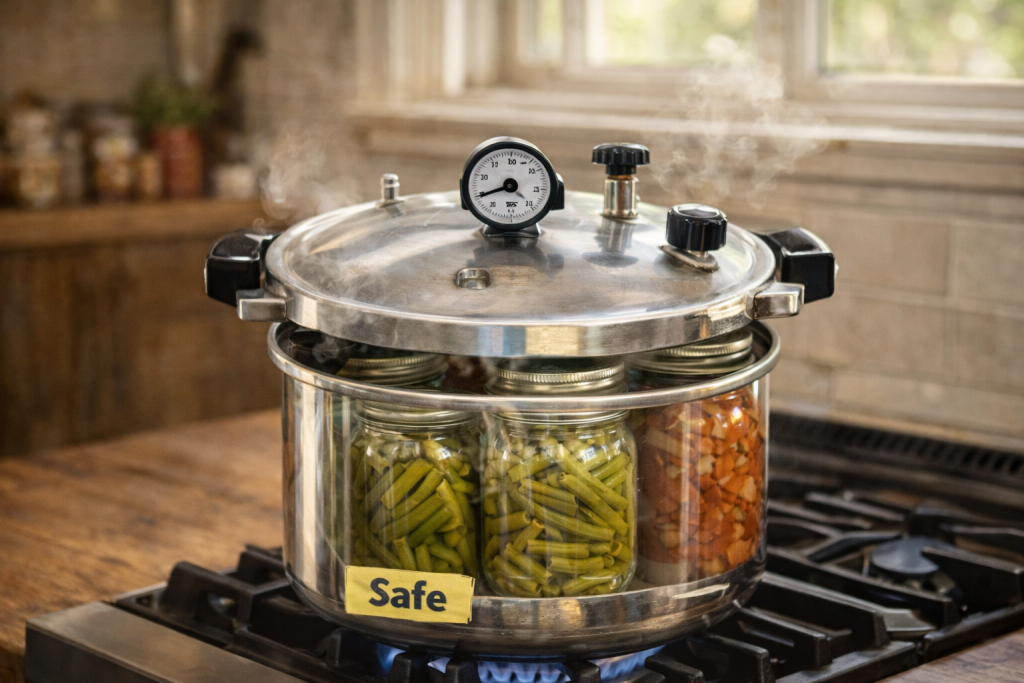
Low-acid foods like meat and vegetables require higher temperatures than boiling water can provide. A pressure canner reaches around 240°F, which is necessary to destroy harmful bacteria that survive lower heat levels.
2. Not Following Tested Recipes
Unverified recipes can have unsafe ingredient ratios.
3. Skipping Jar Sterilization
Even small contamination can grow during storage.
4. Not Adjusting for Altitude
Higher altitude = lower boiling temperature → longer processing needed.
5. Underprocessing (Not Enough Time)
Stopping the process early may leave bacteria alive inside the jar. Even if the jar seals properly, unsafe microorganisms can still grow during storage.
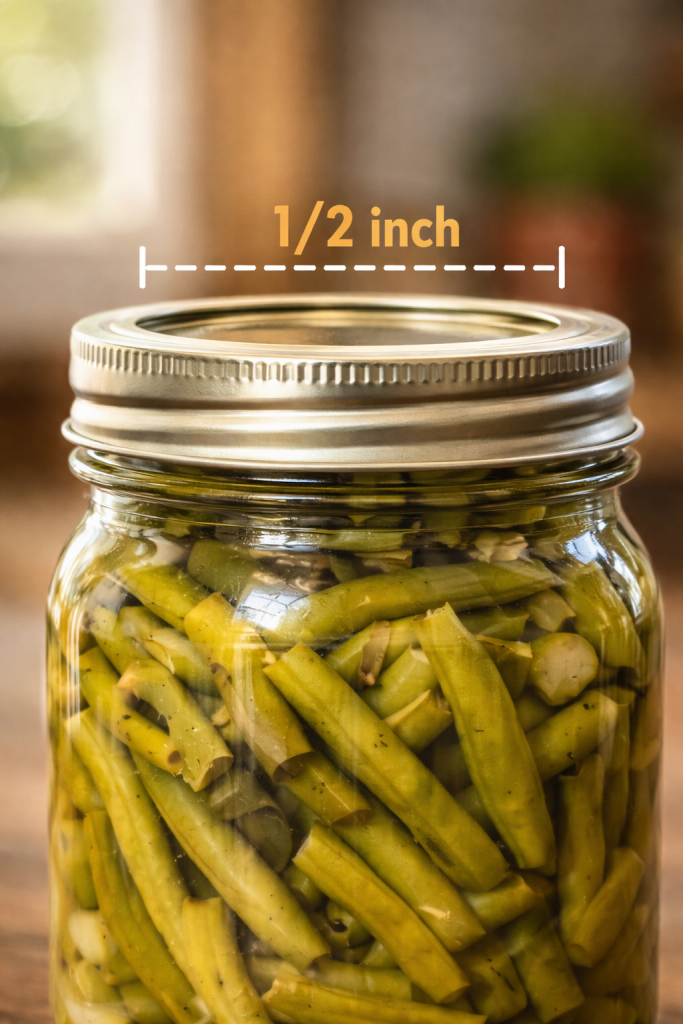
6. Overfilling Jars
Incorrect headspace prevents proper vacuum sealing. This can cause liquid leakage or seal failure, increasing the risk of spoilage over time.
7. Reusing Old Lids
Used lids may fail and allow air inside.
8. Ignoring Spoilage Signs
Bulging lids, leaks, or bad odor = discard immediately.
9. Adding Unsafe Ingredients
Dairy, flour, or thickening agents can make food unsafe.
10. Improper Cooling
Cooling jars too quickly or unevenly can disrupt the sealing process. Letting jars cool naturally helps maintain a stable vacuum seal and safe internal conditions.
11. Not Venting Pressure Canner
Failing to vent trapped air can lower the internal temperature, even if the pressure gauge looks correct. Proper venting ensures consistent heat distribution throughout the canner.
12. Storing in Warm Places
Heat can weaken seals and promote spoilage.
13. Using Damaged Jars
Cracks prevent airtight sealing.
14. Guessing Measurements
Canning requires precision—not estimation.
15. Skipping Acidification
Some foods (like tomatoes) require added acid for safety.
Signs Your Canned Food Is Unsafe
Not all spoiled food looks bad. Watch for bulging lids, leaks, cloudy liquid, or unusual smells. If anything seems off, it’s safer to discard the jar.
Essential Tools to Prevent Mistakes
- Pressure canner
- Water bath canner
- Mason jars
- Jar lifter
- Funnel
- Timer
Using a reliable pressure canner designed for beginners helps maintain consistent temperature and pressure throughout the process. Investing in high-quality tools not only improves safety but also reduces the chances of failed batches over time.

Safe vs Unsafe Canning Comparison
| Factor | Safe Practice | Unsafe Practice | Result |
|---|---|---|---|
| Method | Pressure canning | Water bath only | Risk |
| Time | Exact timing | Guessing | Unsafe |
| Lids | New lids | Old lids | Seal fail |
| Storage | Cool/dark | Warm area | Spoilage |
How to Can Food Safely
Avoiding canning mistakes that can make you sick starts with following each step carefully and using tested methods.
- Use tested recipe
- Prepare ingredients
- Sterilize jars
- Fill correctly
- Remove bubbles
- Seal jars
- Process correctly
- Cool naturally
- Check seals
Following each step carefully ensures safety and long-term storage success.
Safety Note: Never reduce processing time or skip steps, even if jars appear sealed. Proper heat and pressure must reach the center of the jar to ensure harmful bacteria are fully destroyed.
Best Storage Practices for Canned Food
Store jars in a cool, dark, and dry place. Avoid heat and sunlight, as they can weaken seals and reduce shelf life.
Improper storage is one of the overlooked canning mistakes that can make you sick over time.
Money Saving Tips
Buy jars in bulk, reuse jars (not lids), and can seasonal produce. Proper canning prevents food waste and saves money over time.
For example, canning seasonal produce in bulk can reduce grocery costs by 30–50% over time, especially when compared to buying pre-packaged foods year-round. Safe canning ensures you actually keep those savings instead of losing food to spoilage.
Personal Experience
I once overfilled jars thinking it would save time. They sealed—but later spoiled. That taught me that precision matters more than speed.
Beginner Guides You Should Read Next
- Beginner’s Guide to Pressure Canning
- USDA Canning Safety Guidelines Explained
- Best Jars, Lids & Canning Supplies
- How to Sterilize Jars
- Beginner’s Guide to Canning at Home
How Long Does Home Canned Food Last?
Most canned foods last up to one year for best quality. After that, quality may decline even if the food remains sealed.
FAQ
Understanding canning mistakes that can make you sick helps you prevent long-term food safety risks.
Q1: Can botulism be seen or smelled?
No. It often has no visible signs.
Q2: Is home canning safe today?
Yes—if done using tested guidelines.
Q3: Can I reuse lids?
No. Always use new lids.
Q4: How long does canned food last?
Best quality within 1 year.
Q5: Why is headspace important?
It ensures proper sealing and prevents contamination.
Q6: Can I adjust recipes?
Only if you fully understand safety guidelines.
Q7: What temperature kills harmful bacteria?
Pressure canning reaches about 240°F (116°C).
Q8: What should I do if I’m unsure about a jar?
Discard it immediately—don’t take risks.
Who Should Be Extra Careful with Canning?
Children, elderly individuals, and those with weaker immune systems should be especially cautious with home-canned foods.
Conclusion
Canning can be safe, cost-effective, and rewarding when done correctly. By following tested methods and avoiding these common mistakes, you can confidently preserve food without risking your health.
By avoiding canning mistakes that can make you sick, you can safely preserve food for your family.
👉 Start with a beginner-friendly recipe, follow each step carefully, and build your skills over time. Safe canning isn’t about speed—it’s about consistency and confidence in every jar.