
INTRUDUCTION
There’s something unforgettable about the first time you taste sweet & spicy strawberry jalapeño jam. It hits you in layers—the natural sweetness of ripe strawberries, followed by that gentle jalapeño heat that slowly builds but never overwhelms.
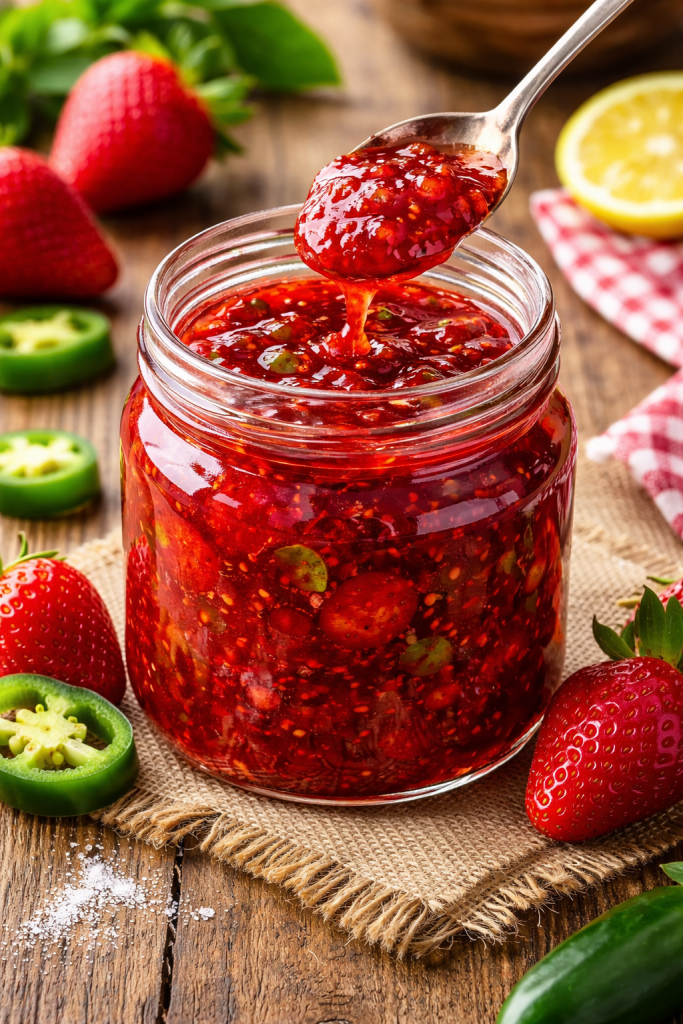
I still remember making my first batch during summer harvest season. I had extra strawberries and a few jalapeños from the garden, and honestly, I wasn’t sure how it would turn out. But one spoonful later—I knew this wasn’t just jam, this was something special.
This sweet & spicy strawberry jalapeño jam is not just a spread—it’s a conversation starter. Whether you’re pairing it with cream cheese, glazing meats, or gifting jars to friends, it delivers both flavor and personality.
But here’s the important part—safe canning matters more than taste. That’s why this guide strictly follows USDA and National Center for Home Food Preservation (NCHFP) recommendations. No guesswork. No unsafe shortcuts.
By the end of this article, you’ll know exactly:
Table of Contents
Quick Answer
Sweet & spicy strawberry jalapeño jam is made by combining strawberries, jalapeños, sugar, pectin, and acid (like lemon juice or vinegar), then processed using a USDA-approved water bath canning method.
Key safety rule:
👉 Always ensure proper acidity and follow tested processing times. Never alter ingredient ratios randomly.
Why Sweet & Spicy Strawberry Jalapeño Jam Is So Popular
This jam has exploded in popularity—and for good reason. It blends two powerful flavor profiles: sweet and heat.
From a taste perspective, strawberries provide a soft, fruity base that balances the boldness of jalapeños. Unlike harsher peppers, jalapeños offer a mild, manageable heat, making this jam accessible even for people who don’t usually like spicy food.
But beyond flavor, there’s versatility. I personally use it in at least five different ways:
- As a glaze on grilled chicken
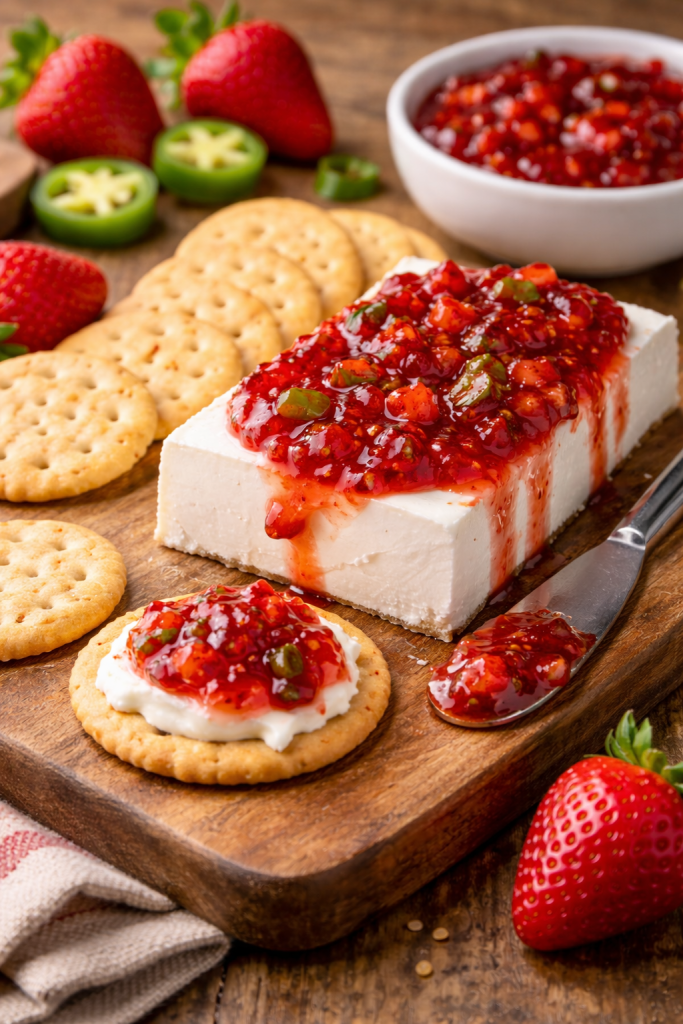
- Spread over cream cheese with crackers
- Mixed into salad dressings
- Paired with roasted vegetables
- Even as a burger topping
Another reason for its popularity is gifting. A jar of homemade sweet & spicy strawberry jalapeño jam feels premium, thoughtful, and unique. I’ve given this as holiday gifts, and people always ask for the recipe.
However, many online recipes skip safety steps. That’s where most people go wrong.
👉 The difference between a great jam and a dangerous one is not flavor—it’s following USDA-approved canning practices.
Why This Sweet & Spicy Strawberry Jalapeño Jam Recipe Works
One thing I’ve learned after years of canning is this—great recipes are not random. They work because of science. And this sweet & spicy strawberry jalapeño jam is a perfect example of balance done right.
Let’s break it down simply.
First, strawberries bring natural pectin and acidity. But on their own, they are not strong enough for safe preservation consistency. That’s why we add commercial pectin—to stabilize texture and ensure proper gel formation.
Jalapeños, on the other hand, are low-acid vegetables. This is where many unsafe recipes fail. If you increase peppers without adjusting acid, you risk creating an unsafe product. That’s why lemon juice or vinegar is not optional—it’s a safety requirement.
👉 From experience: I once experimented by adding extra peppers for more heat, and the flavor was great—but I had to discard the batch because I couldn’t confirm safe acidity. That taught me—flavor never comes before safety.
Then comes sugar. Many people think sugar is just for sweetness. It’s not. It plays multiple roles:
- Helps gel formation
- Preserves color
- Extends shelf life
The real magic happens when all four elements align:
- Fruit (strawberry)
- Heat (jalapeño)
- Acid (lemon/vinegar)
- Structure (pectin + sugar)
This is why tested recipes matter. According to USDA and NCHFP principles, safe canning depends on predictable chemistry, not guesswork.
👉 Simple truth: If you respect the balance, this jam works every time. If you change it blindly, it fails—either in texture or safety.
USDA Safety Guidelines You MUST Follow
Before making any batch of sweet & spicy strawberry jalapeño jam, safety comes first. This is not optional.
According to USDA and NCHFP:
- High-acid foods like fruit jams are safe for water bath canning
- But ONLY if proper acidity is maintained
Key safety rules:
1. Maintain Proper Acid Levels
Strawberries alone are borderline acidic. Jalapeños are low-acid.
👉 That’s why bottled lemon juice or vinegar is required.
Never reduce acid content.
2. Use Tested Pectin Recipes
Pectin ensures proper gel and also impacts safety consistency.
I’ve learned the hard way—skipping pectin can lead to failed batches.
3. Water Bath Processing
Jars must be processed in boiling water for the correct time (based on altitude).
👉 If unsure: Follow USDA-approved guidelines exactly. You can also learn from here our complete guide about Water Bath Processing For Beginner.
4. Sterilized Jars
Always use:
- Clean jars
- New lids
- Proper sealing techniques
If you are new in canning you can learn our complete guide How to Sterilize Canning Jars Properly
5. No Ingredient Guessing
Do NOT:
- Reduce sugar drastically
- Add extra peppers without balancing acidity
- Skip processing
I once tried reducing sugar for a “healthier version”—the texture and preservation failed completely.
Ingredients For Sweet & Spicy Strawberry Jalapeño Jam Recipe
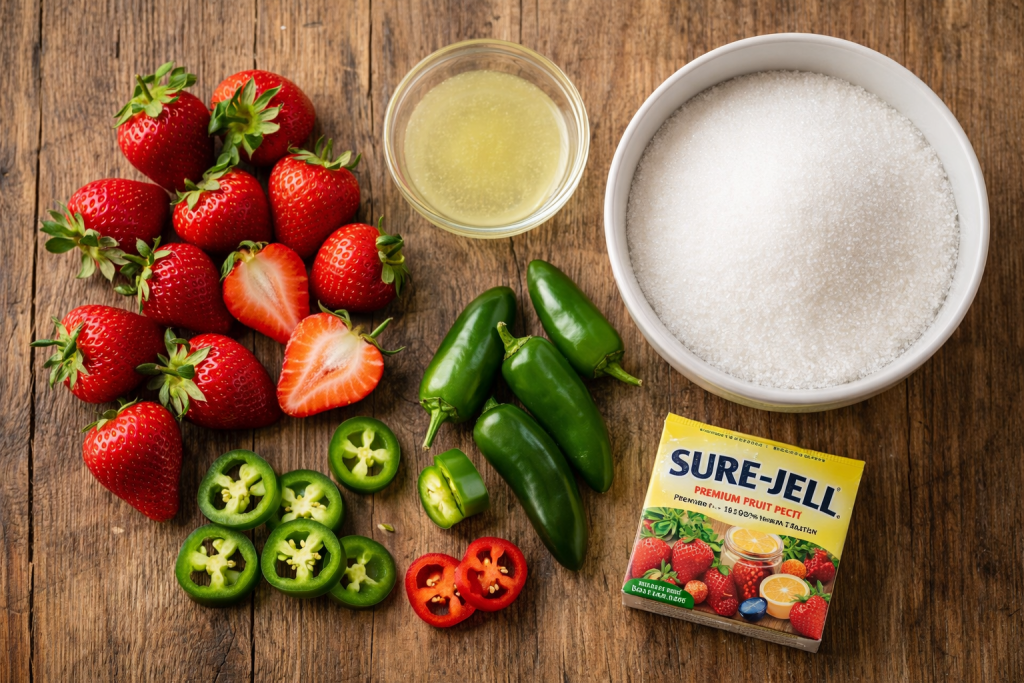
Core Ingredients
- Fresh strawberries (ripe, not overripe)
- Jalapeño peppers (seeded or unseeded depending on heat)
- Granulated sugar
- Lemon juice (bottled for consistent acidity)
- Pectin (liquid or powdered)
Essential Tools
- Large stainless steel pot
- Jar lifter
- Water bath canner
- Sterilized mason jars
- Ladle and funnel
Flavor Variations Ideas
- Add a touch of garlic for savory depth
- Mix in pineapple for tropical flavor
- Use red jalapeños for a sweeter heat
- Add apple cider vinegar for tang
Serving Ideas
- Over cream cheese dip
- With grilled meats
- On toast or biscuits
- As sandwich spread
Comparison Table
| Feature | Strawberry Jam | Pepper Jelly | Strawberry Jalapeño Jam |
|---|---|---|---|
| Flavor | Sweet | Spicy | Sweet + Spicy balanced |
| Use | Breakfast | Appetizers | Multi-purpose |
| Popularity | Common | Moderate | Trending |
| Complexity | Easy | Medium | Medium |
| Shelf Stability | High | High | High (if USDA safe) |
Storage, Shelf Life & Spoilage Signs
This is one section many bloggers ignore—but in real home canning, this is just as important as the recipe itself.
Once your sweet & spicy strawberry jalapeño jam is processed and sealed, proper storage determines how long it remains safe and delicious.
Shelf Life
- Properly sealed jars: up to 12 months
- Store in: cool, dark place (not kitchen heat zones)
👉 From my own pantry: I label every jar with date. It sounds simple, but it saves you from guessing later.
Storage Best Practices
- Avoid sunlight (breaks down color and flavor)
- Keep away from humidity
- Do not stack jars improperly
How to Check Seal Before Storage
- Lid should not flex when pressed
- Center should be slightly concave
- No leaking or sticky residue
If seal fails:
👉 Refrigerate immediately and use within a few weeks
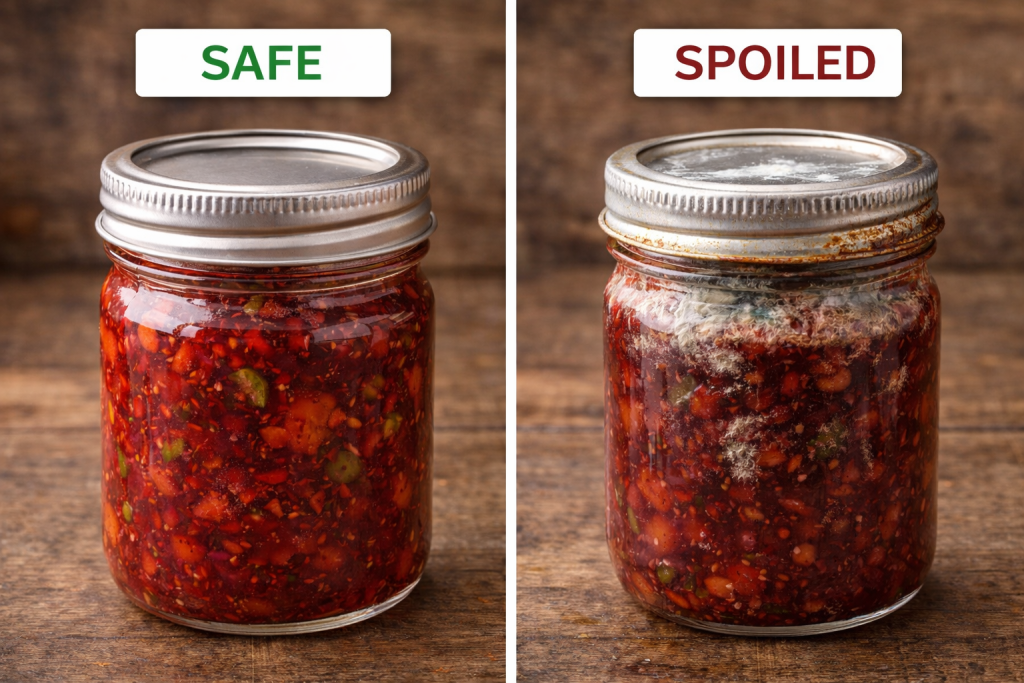
Spoilage Warning Signs
NEVER taste jam if you see:
- Mold growth
- Bubbling or fermentation
- Off smell
- Leaking jars
- Bulging lids
👉 Hard rule I follow:
“When in doubt, throw it out.”
This is not waste—it’s safety.
After Opening
- Refrigerate
- Use within 2–3 weeks
👉 Final tip from experience:
The best jam is not just delicious—it’s safe from the moment you store it to the moment you serve it.
How-To Guide
Step 1: Prepare Ingredients
Wash strawberries, remove stems, and chop.
Finely chop jalapeños.
👉 Tip: Wear gloves when handling peppers.

Step 2: Combine Ingredients
In a large pot:
- Add strawberries
- Add jalapeños
- Add lemon juice
Bring to simmer.
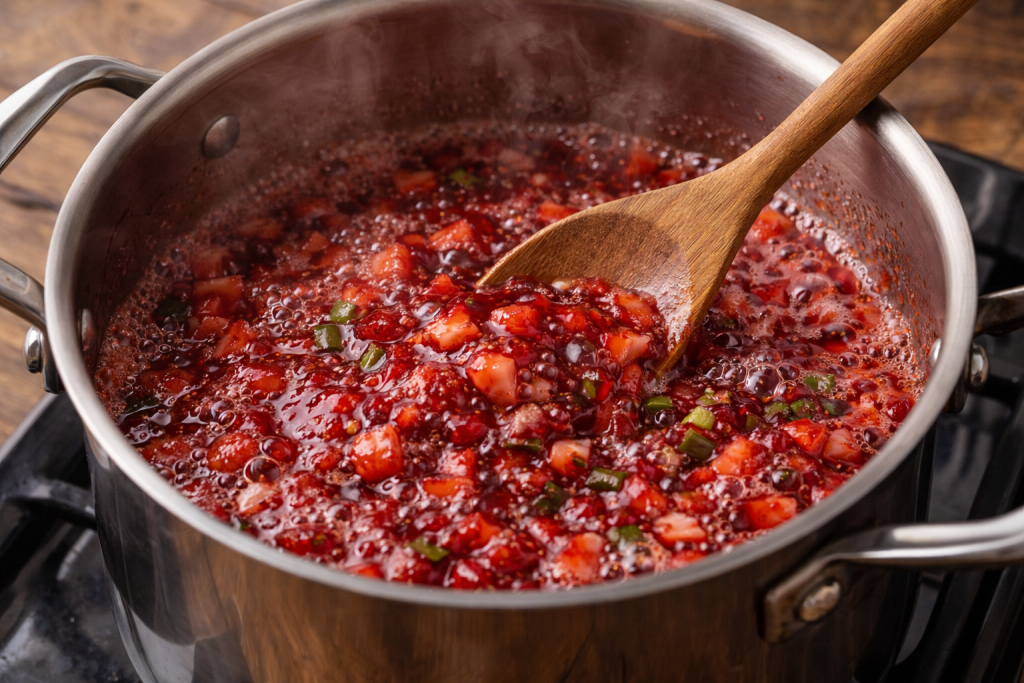
Step 3: Add Pectin
Stir in pectin and bring to full rolling boil.
Step 4: Add Sugar
Add sugar all at once.
Return to rolling boil for 1 minute.
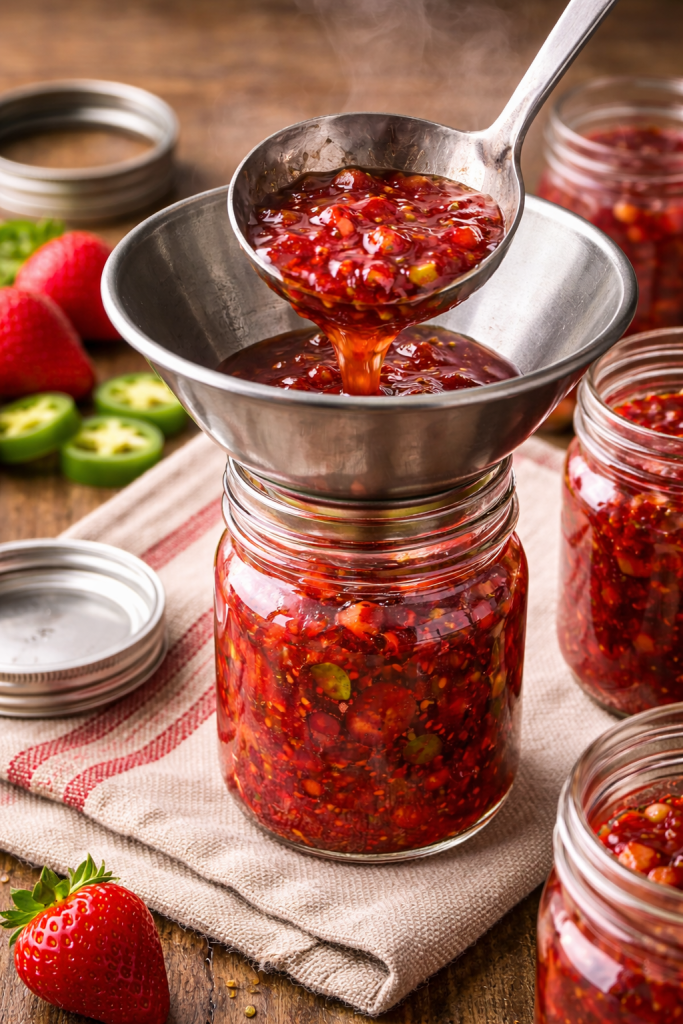
Step 5: Fill Jars
- Leave ¼ inch headspace
- Remove air bubbles
- Wipe rims clean
Step 6: Water Bath Processing
Process jars in boiling water bath.
👉 Always follow USDA-approved timing based on altitude.
Step 7: Cool & Store
Let jars cool for 12–24 hours.
Check seals before storing.
Mistakes to Avoid
I’ve made most of these mistakes myself:
- ❌ Skipping acid → Unsafe product
- ❌ Overcooking → Burnt flavor
- ❌ Under-processing → Spoilage risk
- ❌ Using overripe fruit → Poor texture
- ❌ Not testing seal → Storage failure
Biggest lesson:
👉 Canning is not flexible cooking—it’s precise food science
If you’re new to food preservation, read our beginner guide to 10 Common Canning Mistakes
Small Batch vs Large Batch Canning – Which Is Better?
This is a question I get all the time—and honestly, I’ve done both.
Small Batch Canning
Best for:
- Beginners
- Testing flavors
- Limited storage
Pros:
- Easier control
- Less waste if something goes wrong
Cons:
- Takes more time per jar
Large Batch Canning
Best for:
- Bulk production
- Selling or gifting
- Seasonal preservation
Pros:
- Cost-effective
- Time efficient
Cons:
- Higher risk if mistakes happen
👉 Important USDA Safety Reminder:
Do NOT double recipes unless they are specifically designed for scaling.
This is a mistake many beginners make.
👉 My experience:
I always recommend starting small. Once you understand how your jam behaves, then scale up safely.
👉 Simple rule:
Small batch = learning
Large batch = efficiency
Money-Saving Tips
- Buy strawberries in peak season
- Use homegrown jalapeños
- Reuse jars (but always new lids)
- Make bulk batches
- Freeze extra fruit for later
One thing I always do—buy strawberries in bulk during sales and freeze them. It cuts cost nearly in half.
Personal Experience
The first time I served this jam at a small gathering, people thought it was store-bought gourmet.
One friend literally said:
“Where did you buy this?”
That’s when I realized—this isn’t just a recipe, it’s a premium product opportunity.
Now I make it every season, and honestly, it never lasts long in my pantry.
If You’re Building Your Canning Skills
start with:
- Beginner Water Bath Canning Guide
- Water Bath vs Pressure Canning: Which Method Is Safe for Your Food?
- Is Your Pantry Safe? The Definitive Guide to Identifying Signs of Spoiled Canned Food
- 15 Canning Mistakes That Can Make You Sick
- Best Jars, Lids & Canning Supplies
Trusted Sources for Safe Canning
If you want to build real authority—and avoid dangerous mistakes—you must rely on trusted sources.
These are the gold standards in home food preservation:
- United States Department of Agriculture (USDA)
- National Center for Home Food Preservation
These organizations provide:
- Tested recipes
- Safe processing methods
- Scientific guidelines
Why This Matters
The internet is full of creative recipes—but not all are safe.
👉 I’ve personally seen recipes suggesting:
- No acid added
- Skipping processing
- Open kettle canning (unsafe)
These are NOT safe practices.
What You Should Always Do
- Follow tested recipes
- Use proper acidity
- Follow processing times based on altitude
If unsure:
👉 Follow USDA-approved guidelines
👉 My personal rule:
“If a recipe doesn’t align with USDA or NCHFP, I don’t use it.”
FAQ
Is strawberry jalapeño jam safe for canning?
Yes, if you follow USDA-approved recipes and maintain proper acidity.
Can I reduce sugar?
Only if using tested low-sugar pectin recipes.
How long does it last?
Up to 1 year when properly sealed and stored.
Can I freeze instead of canning?
Yes, freezing is a safe alternative.
Is it very spicy?
No, it’s mild to medium depending on pepper amount.
Conclusion
Sweet & spicy strawberry jalapeño jam is one of those recipes that feels both simple and gourmet at the same time.
It’s versatile, giftable, and incredibly satisfying to make at home. But more importantly—it must be done safely.
If you remember one thing, remember this:
👉 Flavor makes it enjoyable, but USDA safety makes it reliable
Take your time, follow the guidelines, and you’ll have a jam that’s not just delicious—but trustworthy, shelf-stable, and worth sharing.
If you’re new to preserving fruit, you may also enjoy my complete guide to 10 Best Strawberry Jam Canning Recipes